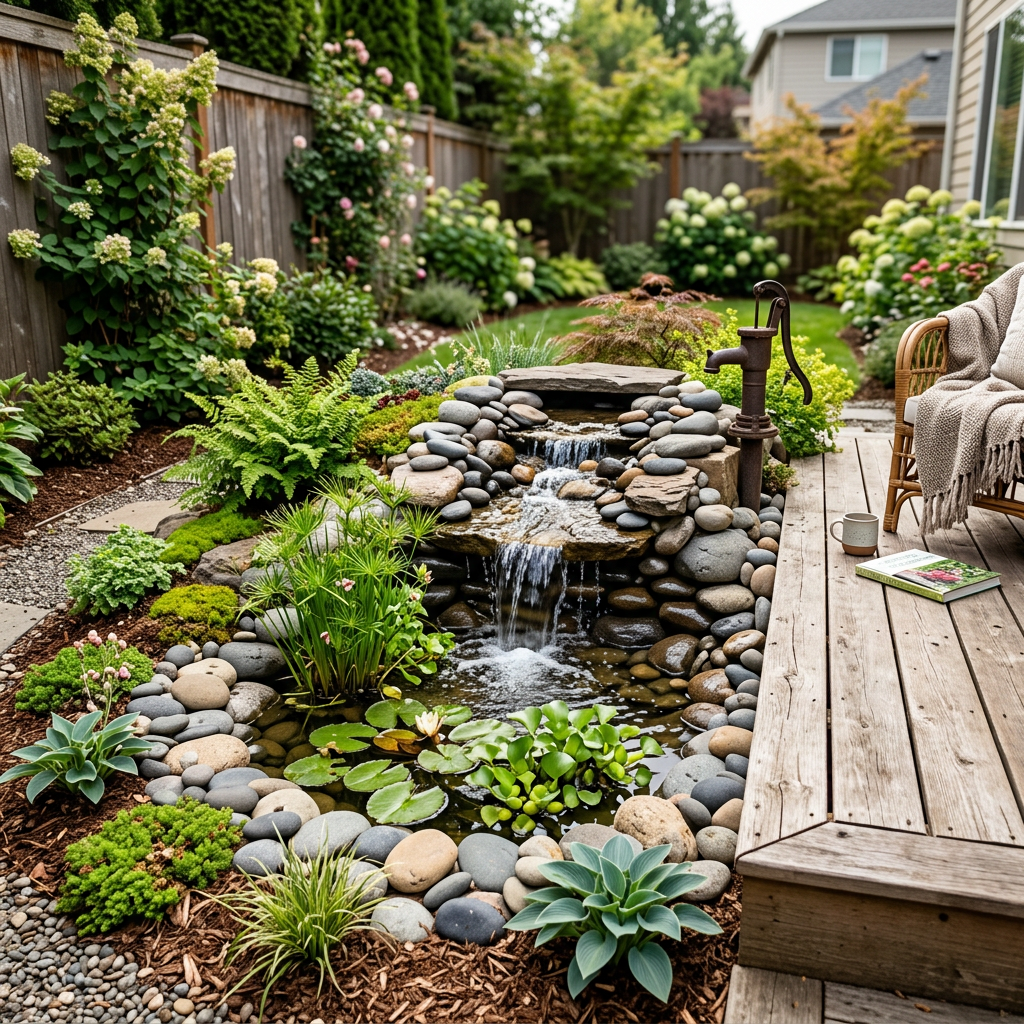
A beautiful water feature doesn’t have to require a huge backyard, expensive landscaping, or a weekend spent digging. Meet the micro-pond—the tiny garden feature bringing water, wildlife, and a little everyday tranquility into even the smallest outdoor spaces.
If you have been looking for an easy way to make your backyard, feel more peaceful and inviting, you may want to look at the Micro-Pond.
Unlike a traditional backyard pond, a micro-pond can fit into a patio corner, garden bed, balcony, courtyard, or even a small container. In fact, current garden trend coverage is increasingly highlighting these miniature water gardens as an affordable way to introduce water and wildlife without taking on a major landscaping project.
And that is exactly what makes this trend so appealing. You do not need acres of property. You do not need an excavator. You do not necessarily need an expensive filtration system.
With the right watertight container, a few aquatic plants, some rocks, and optionally a small solar fountain, you can create a miniature water garden that becomes one of the most interesting features in your yard.
What Exactly is a Micro-Pond?
A micro-pond is essentially a small-scale water garden or container pond designed to create the look and feel of a traditional pond in a much smaller footprint.
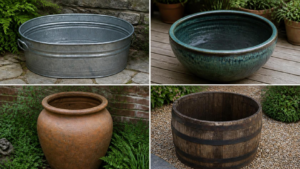
Some are only a couple of feet across, while larger versions can reach three or four feet in diameter. They can be made from containers such as:
- Galvanized tubs
- Large ceramic pots
- Half whiskey barrels
- Stone containers
- Large planters
- Repurposed basins
- Waterproof garden containers
The concept is surprisingly simple: create a watertight environment, add water, introduce appropriate plants, and allow the space to develop into a miniature ecosystem.
BHG describes micro ponds as miniature ecosystems capable of supporting aquatic plants, insects, birds, and microorganisms while adding visual interest to outdoor spaces. That is a lot of impact for something that can take up less space than a typical patio chair.
Why Are Micro-Ponds Trending?
There is a bigger shift happening in outdoor design right now. Instead of treating a backyard as one giant project, homeowners are increasingly creating small, purposeful spaces designed around specific activities and experiences.
Think:
- A tiny reading nook
- A morning coffee corner
- A backyard wellness space
- A small herb garden
- An outdoor dining area
- A fire pit gathering spot
- A miniature wildlife garden
- A peaceful water feature
Micro-ponds fit perfectly into this movement. They add another sensory element to the garden: water
You get movement, reflections, plants, wildlife, and potentially the soft sound of running water—all without committing to a traditional pond.
10 Micro-Pond Ideas for Your Backyard
The best thing about this trend is that there is no single “right” way to create one. Your micro-pond can be rustic, modern, cottage-inspired, minimalist, or completely natural.
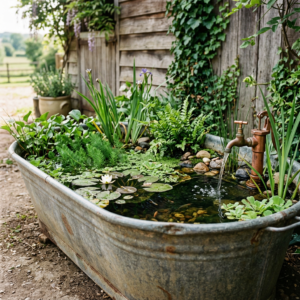
1. The Galvanized Tub Micro-Pond
A galvanized stock tank or tub is one of the easiest ways to create a substantial-looking container pond. Choose a size that works with your space, position it where you want it, and add aquatic plants around different levels.
For a farmhouse or cottage-style backyard, surround the tub with:
- Lavender
- Ornamental grasses
- Potted flowers
- Herbs
- Natural stones
- Wooden garden accessories
The metal container gives the pond an intentional, slightly rustic appearance.
2. The Modern Bowl Pond
For a more sophisticated look, choose a large, simple bowl or low-profile planter. Keep the design minimal with a few carefully selected aquatic plants and smooth stones.
This style works particularly well on:
- Modern patios
- Small decks
- Courtyards
- Contemporary gardens
- Outdoor entertaining areas
A simple container can actually make the water itself become the focal point.
3. The Solar Fountain Micro-Pond
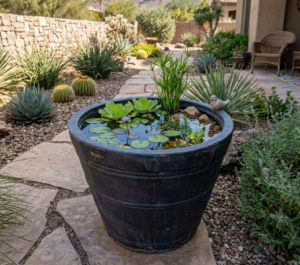
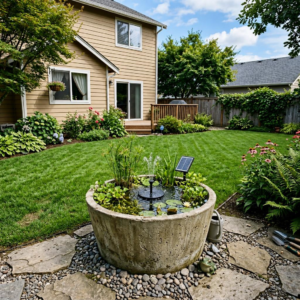
Solar fountains are particularly useful for micro-ponds because they can provide water movement without requiring you to run an electrical cord across the yard. Current garden coverage is also connecting the popularity of container ponds with increasingly accessible solar fountain pumps. The result is more than a decorative pond.
You get the gentle movement and sound of water while keeping the setup relatively simple.
4. The Wildlife Micro-Pond
If you want your micro-pond to do more than look pretty, design it with wildlife in mind.
Birds and insects can use small water features as drinking or bathing areas, while aquatic plants and water-loving insects can turn the container into a miniature habitat.
The key is accessibility.
Include rocks, bricks, or another gently sloping area that gives small animals a way to reach the water and safely get back out. Wildlife-pond guidance emphasizes the importance of providing safe access and exit points for animals.
This small detail can make a significant difference.
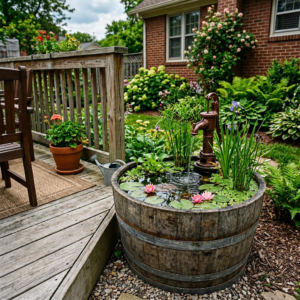
5. The Cottage Garden Micro-Pond
If your backyard has a relaxed cottage-garden style, don’t make the pond too polished.
Instead, surround it with flowers and slightly overgrown greenery.
Try combining:
- Flowering perennials
- Ferns
- Grasses
- Mossy stones
- Aquatic plants
- Vintage containers
The goal is to make the pond appear as though it naturally belongs in the garden.
6. The Japanese-Inspired Micro-Pond
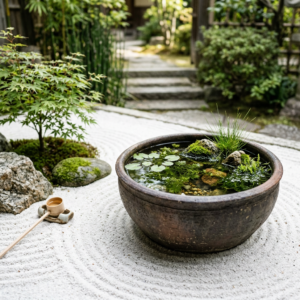
For a calmer, minimalist look, take inspiration from Japanese container gardens. Choose a simple ceramic vessel, keep the plant selection restrained, and incorporate natural stones. You can also use small aquatic plants and subtle movement rather than filling the container with decorations.
The result is less “garden ornament” and more miniature landscape.
Container ponds inspired by Japanese biotope-style gardens are another variation of the growing small-scale water-garden movement.
7. The Patio Micro-Pond
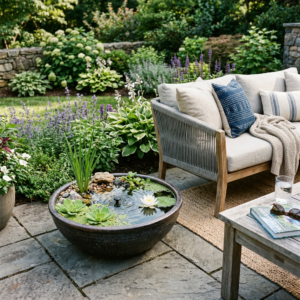
You don’t have to put your pond in the grass. A container pond can become a beautiful patio feature.
Place it near a:
- Bistro table
- Outdoor sofa
- Reading chair
- Pergola
- Garden bench
This is particularly effective if you want your water feature to become part of an outdoor relaxation area.
8. The Pollinator-Friendly Water Garden
Your micro-pond can become part of a larger pollinator garden.
Surround it with flowering plants that attract bees and butterflies, while providing water and habitat nearby. Just remember that not every aquatic plant is appropriate for every region.
Choose plants suited to your climate and, whenever possible, select species that are appropriate for your local ecosystem.
9. The Upcycled Micro-Pond
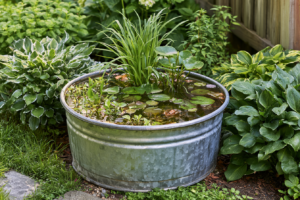
One of my favorite things about this trend is that you do not necessarily need to buy a “pond.” Look around your house, garage, or garden shed.
Could you repurpose:
- An old metal tub?
- A large ceramic planter?
- A stone basin?
- A weatherproof container?
- An unused garden vessel?
If it holds water safely and is appropriate for outdoor use, it may have potential.
That makes a micro-pond particularly appealing for anyone who wants a garden upgrade without a major budget.
10. The Evening Micro-Pond
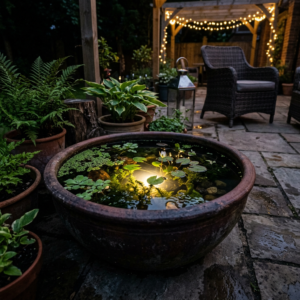
Want to make your micro-pond feel more luxurious? Design it for nighttime.
Add subtle outdoor lighting around the container rather than flooding the entire pond with bright light.
A small solar light, nearby lantern, or carefully positioned landscape light can highlight:
- Water movement
- Plants
- Stones
- Reflections
This can transform a basic daytime garden feature into a relaxing evening focal point.
Step 1: Choose Your Container
Start with a watertight container.
The larger the container, the more stable the miniature ecosystem can be because larger volumes of water generally experience less dramatic temperature and water-quality fluctuations than very small containers.
Avoid containers that previously held chemicals or other substances that could be harmful to aquatic life.
Step 2: Choose the Location
A location with some sunlight is useful for many aquatic plants, but excessive direct sun can encourage algae and increase evaporation, particularly in hot climates. Homes & Gardens recommends considering local climate and choosing a location that avoids excessive direct sunlight.
A spot with morning sun and some afternoon shade can be a good starting point.
Step 3: Add Rocks or Bricks
Use clean rocks or bricks to create different levels inside the container.
This allows you to position plants at appropriate depths.
It also provides important structure for wildlife.
If birds, insects, or other small animals might use the pond, make sure there is an easy way for them to get in and out.
Step 4: Add Water
Fill your container with water appropriate for the plants and animals you intend to keep.
If you’re using tap water, follow the recommendations for your particular aquatic plants and local water supply. Dechlorinated water may be appropriate for some setups.
Rainwater can also be useful where practical.
Step 5: Add Aquatic Plants
This is where your micro-pond really begins to look like a garden.
Depending on your setup and climate, possibilities can include:
- Dwarf water lilies
- Water mint
- Water forget-me-nots
- Hornwort
- Anacharis
- Marginal aquatic plants
BHG specifically recommends oxygenating plants such as hornwort and anacharis as part of a balanced micro pond setup.
Step 6: Add a Solar Fountain — Optional
A pump is not mandatory for every micro-pond.
However, a small solar fountain can add movement, sound, and visual interest.
It can also be an easy way to turn a simple container of water into a more dynamic garden feature.
Step 7: Give It Time
Don’t expect your micro-pond to look like a mature water garden on day one.
Plants need time to establish themselves.
Water conditions will change. Wildlife may gradually discover it. And that’s actually part of the fun.
A good micro-pond is not necessarily something that looks perfectly manicured. It is a tiny living environment that changes over time.
Questions:
1. What About Mosquitoes?
This is one of the first questions many homeowners have.
Standing water can provide mosquito habitat, so don’t assume that every small pond will automatically be mosquito-free. Water movement can help, but it isn’t a complete guarantee.
Avoid creating a neglected container of stagnant water. Keep the pond maintained, remove debris, and consider appropriate mosquito-control measures if needed.
If you are creating a wildlife-focused pond, be especially careful about adding chemicals that could harm beneficial insects or other wildlife.
2. Should You Put Fish in a Micro-Pond?
I would generally skip fish unless you have a larger, properly managed setup.
A tiny container does not provide the same water volume, oxygenation, temperature stability, or filtration capacity as a larger pond.
Instead, consider making your micro-pond about:
plants + water + wildlife + atmosphere.
You can create something beautiful without adding fish.
3. How Much Maintenance Does a Micro-Pond Need?
One of the biggest advantages of a micro-pond is that maintenance can be relatively simple.
You’ll want to:
- Remove fallen leaves and debris
- Monitor water levels
- Top off evaporated water when necessary
- Watch for excessive algae
- Remove unhealthy plant growth
- Clean or maintain a fountain if you use one
- Keep wildlife access points clear
In hot climates, evaporation deserves particular attention.
And if you live somewhere with very hot summers, your location becomes even more important because smaller bodies of water can heat up and evaporate quickly.
4. How Do You Keep Algae from Growing?
This is one of the most asked questions. You keep it clean and free of algae by adding floating plants, using oxygenating plants, limiting direct sun and performing regular water changes. You can also use a tiny solar pump or a bubbler. Moving water stops mosquitoes and helps oxygen levels.
When you can, collect rainwater and use it instead of tap water. Rainwater is naturally soft, chemical-free and contains fewer algae-feeding minerals.
The Best Part? You Can Start Small
You don’t need to redesign your entire backyard. Start with one container. Find a beautiful spot. Add water. Choose a few appropriate plants. Add some stones.
Then see what happens.
Over time, you may notice birds stopping by, insects exploring the plants, reflections changing throughout the day, and your little water garden becoming a place you naturally pause beside.
And that’s really the appeal of the micro-pond.
It isn’t about having a bigger backyard. It’s about getting more out of the backyard you already have.
Final Thoughts
Whether you have a large backyard, a tiny patio, a courtyard, or even a suitable balcony, a container water garden can introduce a completely different element to your space.
And if you’re already creating a backyard wellness corner, a micro-pond could be the perfect finishing touch.
The sound of moving water, the movement of aquatic plants, the appearance of visiting birds, and the simple act of sitting beside a miniature water garden can turn an ordinary corner into something that feels much more intentional.